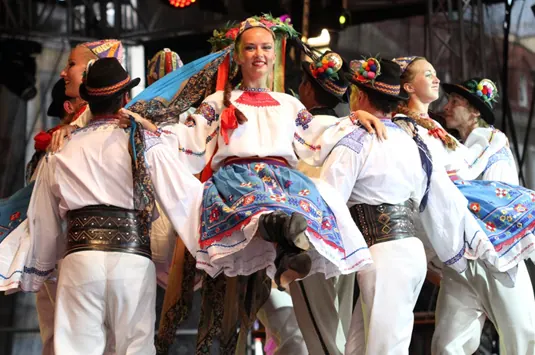
Ask what Transcarpathian culture actually is and you won’t get a one-word answer — the region, home to more than 30 distinct ethnic groups, is genuinely a blend: Boyko, Hutsul and Lemko tradition layered with Slovak, Czech, Hungarian, Polish, Romanian, Bulgarian, Romani and Jewish influence, all shaped by centuries of shared, sometimes overlapping, settlement in the same mountain valleys.
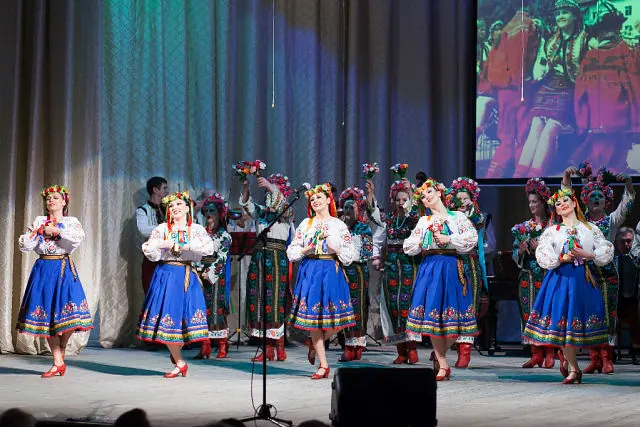
That density of culture is exactly what the Honored Academic Transcarpathian Folk Choir was built to represent when it became the region’s first professional company on September 25, 1945 — performing the folklore of essentially every group living in what’s sometimes called the “Silver Land,” combined with the choir’s own distinctive fusion of dance and choral singing. Among the many artistic directors who’ve led the company since, National Artist of Ukraine Klara Balogh stands out in particular: her choreographed piece “Bereznianka” is now considered a genuine classic of Ukrainian stage choreography, and remains the single best-known Transcarpathian dance performed internationally.
For a region this culturally layered, one company can only ever offer a starting point — but the Transcarpathian Folk Choir’s decades of work make it about as thorough an introduction to Zakarpattia’s dance, music and tradition as exists on a single stage.