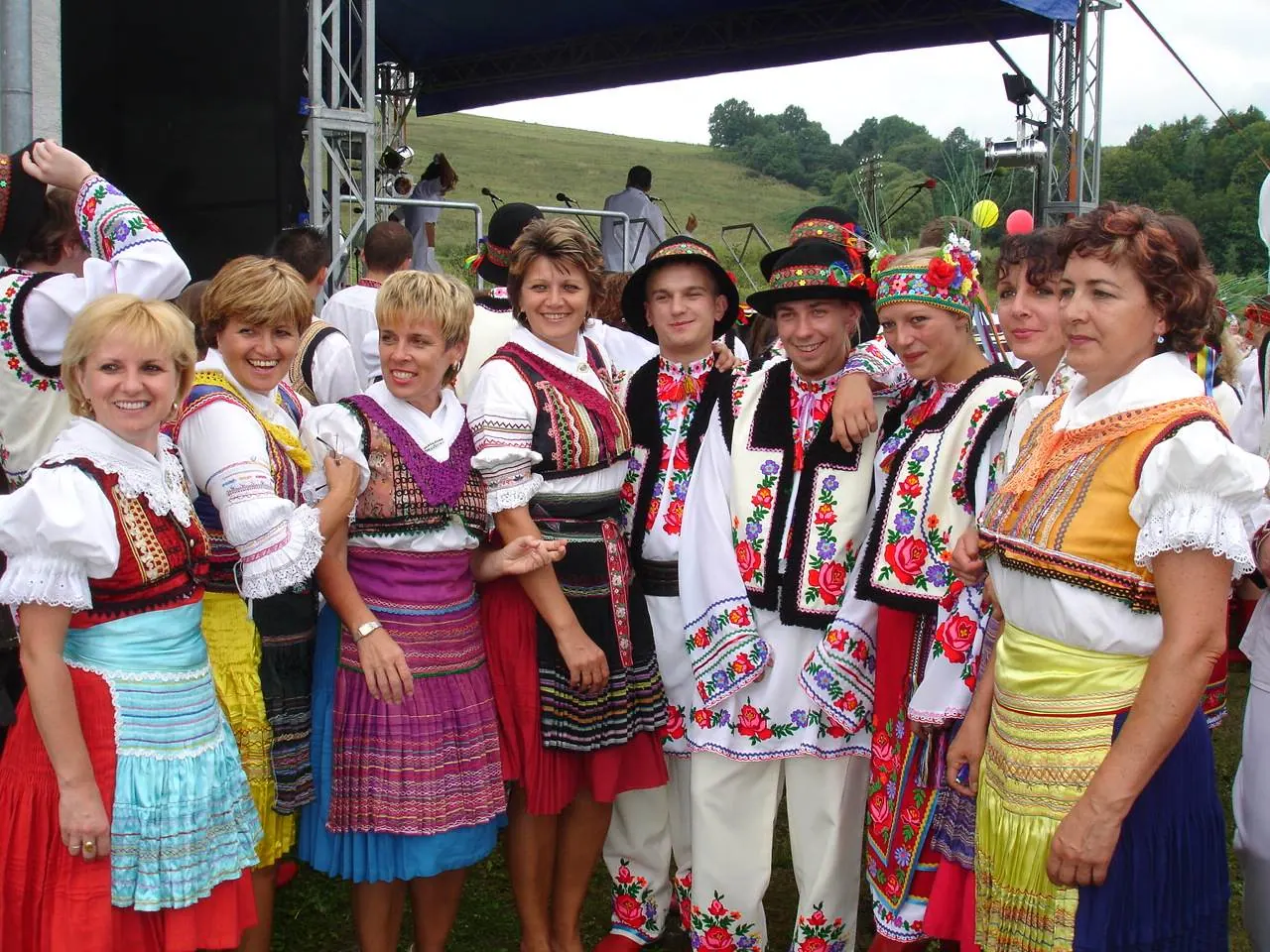
Ask about Hutsuls and people picture kolomyiky, shepherds, richly colorful dress. Ask about the Boykos — one of the three major ethnic groups of the Ukrainian Carpathians, alongside the Hutsuls and Lemkos — and the answer gets murkier. Historians still can’t fully agree where the Boykos came from or where their name originates; a Croatian researcher once quipped that there have been fewer actual Boikos than pages written trying to explain them. The earliest written mention dates all the way back to 946, in Byzantine Emperor Constantine VII’s chronicle “De Administrando Imperio,” which places an unbaptized Serb population in an area called “the Boiko” — suggesting the Boykos may descend from Croatian and Serbian tribes who chose to stay behind rather than migrate to the Balkans in the 7th century, though a rival theory ties them instead to the ancient Scythian “Boisy” tribe.
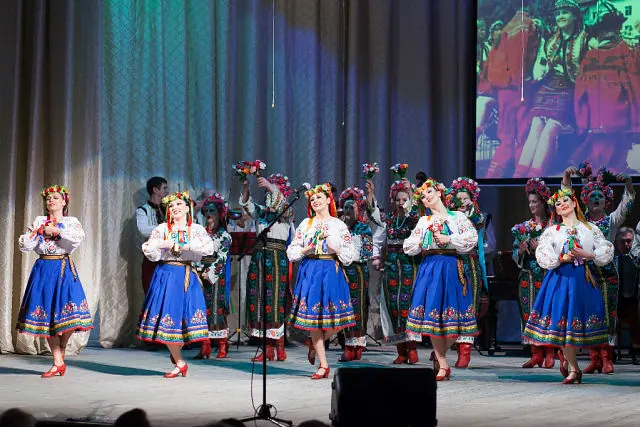
What’s clearer is where they live now: both slopes of the middle Carpathians across Lviv, Ivano-Frankivsk and Transcarpathia oblasts, likely descended from the same White Croatian stock that came under Kyivan Rus’ rule during Prince Volodymyr the Great’s reign. Geographically wedged between the Lemkos to the west and the Hutsuls to the east, Boykos developed a dance style that’s noticeably calmer and smoother than either neighbor — steps performed with slightly bent knees, distinctive stomping, women’s jumps reminiscent of Hungarian dance, torso twists and diagonal steps, often danced with one or both hands raised, and carrying real Polish and Slovak influence in its structure. Typical Boyko dances include “Verkhovyna,” “Kerechanka,” the wedding dance “Topolia” and the shepherds’ dance “Chaban.”
Despite their relatively muted, understated dance style next to their more colorful neighbors, the Boykos have an outsized list of notable descendants: Hetman Petro Sahaydachny, coffee-to-Europe pioneer Yuri Kulchytsky, writer Ivan Franko, dance theorist Vasyl Verkhovynets, national anthem composer Mykhailo Verbytsky, theatre director Les’ Kurbas, and Stepan Bandera all trace back to Boyko roots. Their relative isolation in the mountains preserved something genuinely old in Ukrainian culture — not flashy, but foundational, close to the Proto-Slavic root the rest of the Carpathian traditions eventually branched from.