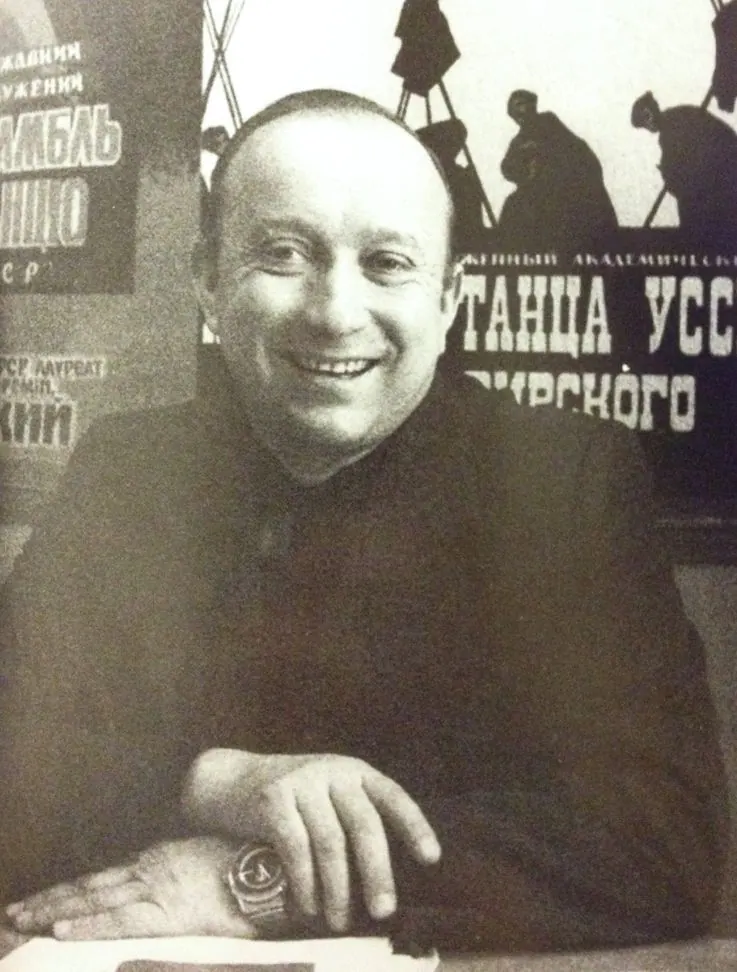
In Lviv in 1956, a 17-year-old stood outside a theatre staring at a poster for the Virsky Ensemble, doing the math: a ticket cost 2.5 rubles, his monthly student bursary was 18, and he had exactly 3 rubles left with a week to go before his next payment. He bought the ticket anyway. That decision — food money spent on a dance performance — belonged to Myroslav Vantukh, and it’s worth wondering what path Ukrainian folk choreography might have taken if he’d chosen differently.
Vantukh was born January 18, 1939, in the village of Zhelykhiv, his childhood shaped by Soviet annexation and then war. His first real brush with performance came at school in 1946, dancing a Belorussian piece in a village drama-club show — a small beginning to what became a defining passion. After graduating the Lviv College of Cultural Education and completing his army service, Vantukh began working at the Lviv Palace of Culture in 1961, and by 1964 had turned an idea into reality by founding the “Yunist” ensemble.
Building “Yunist” into a serious company took real discipline: on Pavlo Virsky’s own advice, Vantukh added classical ballet and dedicated technique classes to the dancers’ training, a combination — ballet, then technique, then rehearsal — the ensemble still uses today. It paid off quickly: “Yunist” toured internationally, won a grand prix in Italy, and became recognized as one of the top folk-dance companies in the Soviet Union. When Pavlo Virsky died in 1975, the ensemble he’d built spent five years searching for a successor before finally, in 1980, offering the position to Vantukh himself.
The transition wasn’t smooth at first, but by 1984 Vantukh had produced “Karpaty,” one of his first genuine successes with the company, and he met the economic collapse of the 1990s — when dancers went unpaid and many left for opportunities abroad — by building a formal training pipeline: a school, then a studio, then the ensemble itself, so the company could grow its own next generation rather than simply hope one showed up. Today the Virsky Ensemble he leads is widely considered the standard-bearer of Ukrainian folk dance, and participants on Ukrainian Dance World’s own workshop tours have had the rare chance to train directly at the Virsky studio — a small, ongoing thread connecting back to that 17-year-old outside a Lviv theatre, deciding a ticket mattered more than dinner.